
Introduction
Modal vs viscose is a common comparison for consumers, designers, and textile professionals who want to understand which fabric is more suitable for a specific garment or collection. At first glance, modal and viscose may appear very similar because both are soft, fluid, comfortable, and cellulose-based fibers. However, there are important differences between them in terms of production method, durability, moisture management, fabric feel, care requirements, and overall performance.
Both modal and viscose are regenerated cellulose fibers. Their raw material comes from cellulose, which is processed and transformed into textile fibers. The main difference is that modal is produced through a modified viscose process designed to provide improved mechanical properties, especially when the fiber is wet.
For this reason, the modal vs viscose comparison should not be limited to softness alone. Fabric construction, yarn quality, fiber blends, finishing processes, and intended use all influence the final performance of a textile product.
Marsala Textile develops fabric solutions by considering both the technical characteristics of fibers and the design requirements of each collection. In this guide, we explain the most important differences between modal and viscose and help you understand which option may be better for different textile applications.
Table of Contents
- What Is Modal Fabric?
- What Is Viscose Fabric?
- Modal vs Viscose: What Is the Main Difference?
- Modal vs Viscose Production Process
- Softness and Fabric Feel
- Modal vs Viscose Durability
- Breathability and Moisture Management
- Which Fabric Is Better for Summer?
- Wrinkling and Shrinkage
- Common Uses of Modal and Viscose
- Modal vs Viscose: Which One Should You Choose?
- What to Consider When Choosing Fabric
- Marsala Textile and Modal Fabric Solutions
- Frequently Asked Questions
- Conclusion
What Is Modal Fabric?
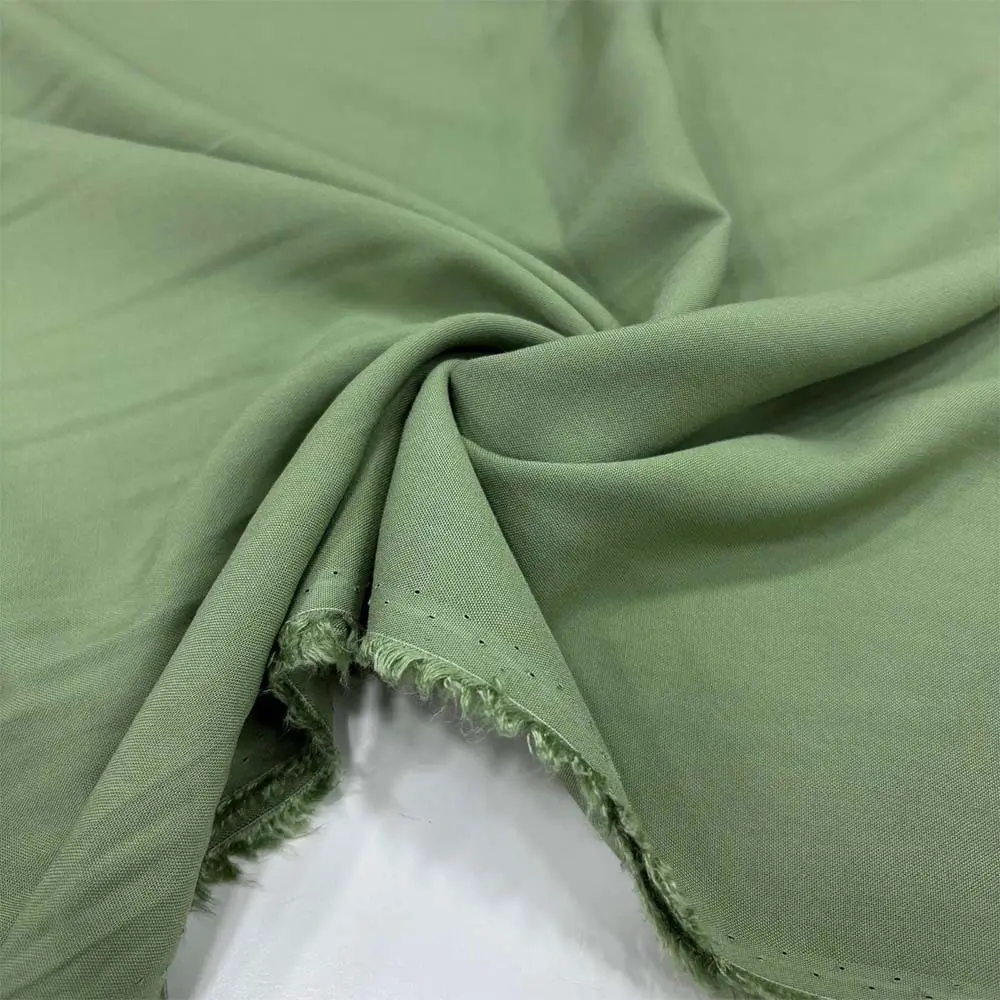
Modal fabric is produced from regenerated cellulose fibers and is especially known for its soft, smooth, and comfortable surface. The cellulose used in modal production is generally obtained from wood-based sources and processed before being regenerated into fiber form.
Modal belongs to the regenerated cellulose fiber family. Although its production process is related to viscose, modal is manufactured under modified conditions that improve certain physical characteristics of the fiber.
One of the most important features of modal is its ability to maintain better mechanical performance when wet. This characteristic can be particularly useful for garments that are frequently washed or worn.
Modal fabric is also known for:
- Soft and smooth texture
- Comfortable feel against the skin
- Good moisture absorption
- Fluid drape
- Suitability for lightweight garments
- Compatibility with different fiber blends
- Good dimensional stability depending on fabric construction
Because of these characteristics, modal is widely used in T-shirts, underwear, pajamas, dresses, loungewear, blouses, and comfort-focused clothing.
What Is Viscose Fabric?
Viscose is another regenerated cellulose fiber widely used in the textile and fashion industries. Like modal, it is produced from cellulose that undergoes a controlled industrial process before being transformed into textile fiber.
Viscose is particularly valued for its softness, fluidity, and elegant drape. It can create lightweight fabrics that move naturally with the body, which makes it popular for dresses, skirts, blouses, shirts, and summer collections.
Another important characteristic of viscose is its ability to absorb moisture. This can contribute to a comfortable wearing experience, especially in lightweight garments.
However, viscose may be more sensitive when wet compared with modal. Its final performance depends heavily on fabric construction, yarn structure, fiber blends, and finishing treatments.
In the modal vs viscose comparison, this difference in wet performance is one of the most important technical factors.
Modal vs Viscose: What Is the Main Difference?
The main difference in the modal vs viscose comparison comes from the production process and the resulting physical properties of the fibers.
Both fibers are regenerated cellulose-based materials, but modal is produced using a modified viscose process. This process is designed to improve the strength and stability of the fiber, particularly in wet conditions.
The key differences can be summarized as follows:
- Fiber category: Both are regenerated cellulose fibers.
- Production: Modal uses a modified viscose manufacturing process.
- Wet strength: Modal generally performs better when wet.
- Softness: Modal is often known for a particularly smooth and soft feel.
- Drape: Both can provide elegant, fluid movement.
- Moisture absorption: Both are capable of absorbing moisture.
- Dimensional stability: Modal can offer better stability depending on fabric construction.
- Applications: Modal is often used in comfort-focused garments, while viscose is widely used in fashion collections.
These differences do not mean that one fabric is always better than the other. The correct choice depends on the needs of the product.
Modal vs Viscose Production Process
Understanding production is essential when comparing modal vs viscose.
Both fabrics begin with cellulose. This cellulose is processed and converted into a solution that can later be regenerated into textile fibers.
In viscose production, cellulose goes through a series of chemical and physical processes before being regenerated as filament or staple fiber.
Modal follows a similar basic principle but uses modified production conditions. These changes improve the internal structure of the fiber and can increase its wet strength and dimensional stability.
For official definitions and classifications of textile fibers, you can review the European Union regulation on textile fiber names and composition.
This means modal is not simply another marketing name for viscose. It has distinct technical characteristics.
The production process also influences how the fiber behaves during spinning, knitting, weaving, dyeing, washing, and daily use.
For textile manufacturers, these differences can be highly important when selecting a fiber for a specific collection.
Softness and Fabric Feel
Softness is one of the first features consumers notice when they compare modal vs viscose.
Modal is widely known for its smooth, soft, and refined hand feel. This makes it especially suitable for products that come into direct contact with the skin.
Common modal applications include:
- Underwear
- Loungewear
- T-shirts
- Pajamas
- Tank tops
- Lightweight dresses
Viscose is also soft, but its strongest visual characteristic is often its fluid drape. It creates fabrics that move naturally and create elegant silhouettes.
For example, viscose can be an excellent choice for a flowing summer dress, while modal may be preferred for a soft everyday T-shirt.
Therefore, softness should not be evaluated separately from the intended application.
Modal vs Viscose Durability
Durability is another major factor in the modal vs viscose comparison.
Modal is generally designed to maintain better mechanical strength in wet conditions. This can be important because washing exposes fabrics to water, movement, friction, and temperature changes.
Viscose fabrics may become more sensitive when wet and may require more careful handling during washing and drying.
However, durability does not depend only on the fiber.
Other important factors include:
- Yarn quality
- Fabric density
- Fabric weight
- Knitting technique
- Weaving structure
- Fiber blend ratio
- Dyeing process
- Finishing treatments
- Washing temperature
- Drying method
A high-quality viscose fabric can perform very well when correctly produced and cared for. Similarly, a modal fabric with poor construction may not deliver the expected performance.
For this reason, evaluating the complete fabric structure is essential.
Breathability and Moisture Management
Breathability is often discussed when comparing modal vs viscose.
Both modal and viscose have cellulose-based structures that can absorb moisture. This can support comfort in garments worn close to the skin.
However, breathability is not determined by fiber type alone.
A lightweight, loosely knitted modal fabric will usually feel more breathable than a heavy, dense modal fabric. The same principle applies to viscose.
Breathability depends on:
- Fabric thickness
- Fabric weight
- Yarn structure
- Knit or weave density
- Fiber blend
- Finishing processes
- Garment design
This is why textile professionals evaluate not only fiber composition but also overall fabric construction.
Which Fabric Is Better for Summer?
Both modal and viscose can be suitable for summer clothing.
A lightweight modal fabric can provide softness and moisture absorption, making it useful for T-shirts, dresses, and lightweight garments.
Viscose can also perform well in warm weather because it can produce lightweight and flowing fabrics.
However, the question should not simply be whether modal or viscose is better for summer.
A better evaluation includes:
- Fabric weight
- Garment fit
- Fiber blend
- Weave or knit density
- Airflow
- Moisture absorption
A thin viscose dress may feel cooler than a thick modal top, while a lightweight modal T-shirt may be more comfortable than a tightly woven viscose garment.
Therefore, fabric construction is just as important as fiber choice.
Wrinkling and Shrinkage
Wrinkling and shrinkage are important topics in the modal vs viscose comparison.
Viscose fabrics may wrinkle more easily depending on their structure and finishing. Leaving a viscose garment inside the washing machine after the cycle is complete can increase wrinkling.
Modal fabrics may provide better dimensional stability depending on the yarn and fabric construction, but modal is not completely wrinkle-free.
Both fabrics can also shrink if they are exposed to excessive heat.
To help preserve modal and viscose garments:
- Follow the care label.
- Avoid unnecessarily high washing temperatures.
- Do not aggressively stretch the fabric when wet.
- Avoid excessive tumble-drying heat.
- Use the recommended ironing temperature.
- Store garments properly after drying.
Correct care can significantly extend the lifespan of both fabrics.
Common Uses of Modal and Viscose
Both modal and viscose are used in many textile applications, but each fiber may be more suitable for certain products.
Modal is commonly used in:
- T-shirts
- Underwear
- Pajamas
- Loungewear
- Dresses
- Blouses
- Casualwear
- Comfort-focused collections
Viscose is widely used in:
- Dresses
- Blouses
- Shirts
- Skirts
- Trousers
- Tunics
- Summer garments
- Fashion collections
Both fibers can also be blended with cotton, elastane, polyester, and other textile fibers.
Blending allows manufacturers to combine different characteristics such as softness, stretch, durability, or recovery.
This flexibility makes both modal and viscose valuable materials in modern textile production.
Modal vs Viscose: Which One Should You Choose?
The answer to modal vs viscose depends on the intended use of the fabric.
Modal may be a strong choice when the main priorities are:
- Softness
- Skin comfort
- Moisture absorption
- Better wet strength
- Everyday wear
- Frequent washing
Viscose may be a strong choice when priorities include:
- Fluid drape
- Lightweight structure
- Elegant movement
- Fashion-oriented design
- Summer garments
- Flowing silhouettes
Neither fiber is universally superior.
The best choice depends on the design objective, target consumer, garment type, required performance, and expected care conditions.
For professional textile collections, these factors should always be evaluated together.
What to Consider When Choosing Fabric
Fabric selection plays a major role in the success of a garment.
When comparing modal vs viscose, designers and brands should consider more than fiber composition.
Important criteria include:
- Intended season
- Fabric weight
- Fiber blend
- Stretch
- Surface texture
- Moisture management
- Wash performance
- Drape
- Color performance
- Desired softness
- Expected product lifespan
- Target price segment
For example, a summer dress may prioritize fluidity and lightness, while underwear may prioritize softness and moisture management.
A successful fabric choice balances aesthetics, functionality, comfort, and production requirements.
Marsala Textile and Modal Fabric Solutions
Marsala Textile develops fabric solutions based on the specific needs of different brands and collections.
The company approaches fabric selection by evaluating fiber composition, yarn quality, fabric construction, weight, texture, and intended use together.
Modal fabric can be particularly suitable for collections that prioritize softness, comfort, and an elegant surface feel.
When combined with appropriate yarns, fabric structures, and finishing processes, modal can be adapted to a wide range of ready-to-wear applications.
For Marsala Textile, choosing between modal and viscose is not simply a matter of selecting a fiber name.
The final decision should reflect:
- Product category
- Design language
- Performance expectations
- Target consumer
- Seasonal conditions
- Desired hand feel
This approach helps create fabrics that combine aesthetic quality with functional performance.
Frequently Asked Questions
What is the difference between modal and viscose?
The main difference between modal and viscose comes from the production process. Both are regenerated cellulose fibers, but modal is produced using a modified viscose process designed to improve characteristics such as wet strength and dimensional stability.
Modal vs viscose: which is better?
There is no universal winner in the modal vs viscose comparison. Modal may be better for softness and wet strength, while viscose may be preferable for fluid drape and lightweight fashion garments.
Is modal the same as viscose?
No. Modal and viscose belong to the same regenerated cellulose fiber family, but they are not identical. Modal is produced using a modified viscose process and has different technical characteristics.
Is modal softer than viscose?
Modal is often associated with a very soft and smooth hand feel. However, final softness also depends on yarn quality, fabric construction, and finishing treatments.
Does modal make you sweat?
Modal can absorb moisture and may provide comfortable wear, especially in lightweight fabrics. However, comfort also depends on fabric thickness, garment fit, climate, and activity level.
Does viscose make you sweat?
Viscose can also absorb moisture and can be comfortable in warm weather. A lightweight viscose fabric may feel cool and breathable depending on its construction.
Is modal good for summer?
Yes. Lightweight modal fabrics can be suitable for summer clothing because of their soft feel and moisture absorption.
Is viscose good for summer?
Yes. Viscose is widely used in summer clothing due to its lightweight structure, fluidity, and moisture absorption.
Does modal shrink?
Modal may shrink if exposed to excessive heat or improper care. Following the care instructions on the garment label is important.
Does viscose shrink after washing?
Viscose can shrink when exposed to high washing or drying temperatures. The level of shrinkage depends on fabric construction and finishing.
Is modal natural or synthetic?
Modal is classified as a regenerated cellulose fiber. Its cellulose comes from natural sources, but the fiber itself is created through an industrial manufacturing process.
Is viscose natural or synthetic?
Viscose is also a regenerated cellulose fiber. It is produced from plant-derived cellulose that is processed and regenerated into textile fiber.
Which is more durable: modal or viscose?
Modal generally offers better wet strength than conventional viscose. However, overall garment durability depends on fabric construction, yarn quality, finishing, and care.
Conclusion
The modal vs viscose comparison highlights the similarities and differences between two important regenerated cellulose fibers.
Both modal and viscose can offer softness, moisture absorption, comfort, and fluid drape. However, modal is produced through a modified viscose process and is generally associated with improved wet strength and dimensional stability.
Viscose remains an important option for lightweight, flowing, and fashion-oriented garments, while modal is often preferred in collections focused on softness and comfort.
The best choice depends on product design, garment type, fabric weight, care requirements, desired hand feel, and performance expectations.
Marsala Textile combines fiber knowledge, fabric development experience, and production expertise to create textile solutions for different collections. By choosing the right fiber, yarn, construction, and finishing process, brands can achieve both aesthetic quality and functional performance.