
Introduction
Breathable fabric is a textile surface that supports the movement of air and moisture, helping create a more balanced microclimate between the body and the surrounding environment. From everyday clothing and sportswear to underwear and home textiles, breathability is one of the main factors that determine comfort. Choosing the right material is particularly important in warm weather and active conditions. It can help maintain a cooler feeling, prevent moisture from remaining on the skin for too long, and make a garment feel more comfortable throughout the day.
However, the presence of natural fibres does not automatically mean that a fabric will offer high air permeability in every situation. In addition to fibre type, yarn structure, weave or knit density, fabric thickness, weight and finishing treatments directly affect performance. A fabric should therefore be evaluated in relation to its intended use rather than according to one feature alone. In its collection and production processes, Marsala Textile considers drape, handle, comfort and seasonal requirements alongside aesthetic expectations to develop suitable fabric solutions.
Contents
- What does breathable fabric mean?
- How does fabric breathability work?
- Which types of fabric are breathable?
- Differences between cotton, linen, viscose and modal
- The relationship between breathability and moisture management
- How weaving and knitting structures affect breathability
- How can you tell whether a fabric is breathable?
- Choosing the right fabric for summer and everyday clothing
- Quality and performance criteria in fabric production
- How to care for breathable fabrics
- Fabric solutions from Marsala Textile
- Frequently asked questions
- Conclusion
What Does Breathable Fabric Mean?
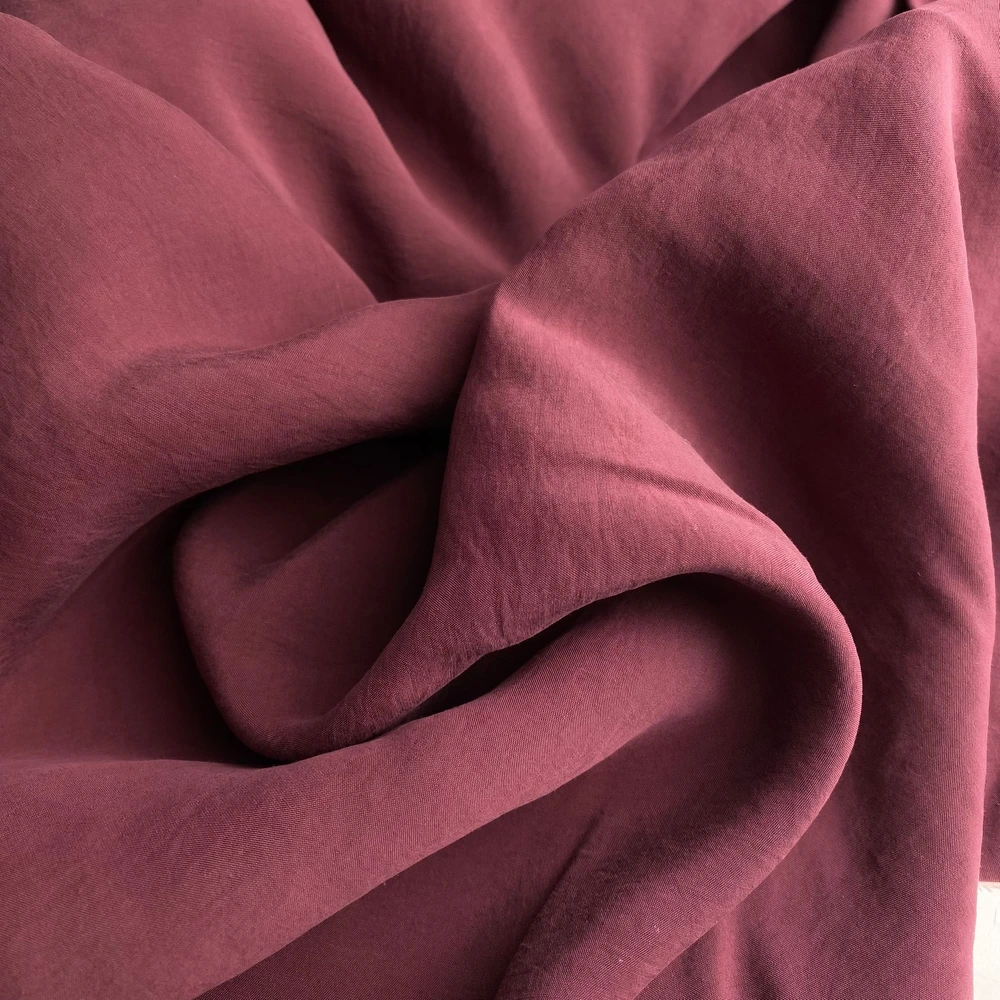
Breathable fabric allows a certain amount of air to pass through its surface because of its pores and the structural characteristics of its fibres. It also helps reduce the accumulation of heat and moisture inside a garment. This quality can make the wearer feel drier and more comfortable. Although breathability is strongly associated with summer clothing, it also affects the comfort of garments designed for year-round use.
The terms “breathable” and “sweat-free” are often used interchangeably in everyday language, but no fabric can stop the body from sweating completely. Sweating is a natural process through which the body regulates its temperature. A well-chosen textile helps manage the resulting heat and moisture. It is therefore more accurate to say that a fabric supports ventilation and moisture transfer than to claim that it prevents sweating.
Breathability is not a single, isolated property. Air permeability, water-vapour transfer, absorbency, drying rate and the fit of the finished garment all contribute to the wearer’s experience. A lightweight fabric with an open structure may feel airy, while a material that effectively moves moisture away from the skin may feel dry during activity. The required balance depends on where and how the garment will be used.
How Does Fabric Breathability Work?
Air permeability describes how readily air can pass through a textile surface. When fibres are spun into yarn and the yarn is woven or knitted into fabric, microscopic spaces form within the structure. The size, distribution and continuity of these spaces affect airflow. A loose, open surface can generally allow more air to pass than a dense structure. Nevertheless, durability, appearance, opacity and the required level of protection must also be considered.
The main factors that influence fabric breathability include:
- Whether the fibre is natural, regenerated or synthetic
- The fibre’s relationship with moisture
- Yarn thickness, twist and surface character
- Weave or knit density
- Fabric weight and total thickness
- The size and distribution of pores
- Dyeing, coating and finishing treatments
- Linings, laminations and multilayer structures
- The fit and construction of the finished garment
These variables work together. A highly absorbent fibre may not deliver the expected freshness when used in a heavy and tightly constructed fabric. Conversely, a technical textile made from synthetic fibres may transfer moisture efficiently because of its specialised yarn and knit design. The best result is achieved when fibre selection and fabric construction are balanced according to the intended application.
Which Types of Fabric Are Breathable?
Cotton, linen, viscose, modal, lyocell, wool and silk are among the common fibre and fabric options used for breathable garments. Each offers a different balance of moisture management, softness, durability, drape and care requirements. Rather than identifying one universal “best fabric,” it is more useful to choose the most suitable material for a particular product, season and level of activity.
Cotton is widely used in daily wear because of its soft feel and ability to absorb moisture. Linen is a strong choice for warm-weather collections due to its characteristic texture and fresh handle. Viscose, a regenerated cellulose fibre, is frequently selected for dresses, blouses and other flowing garments because of its soft and fluid appearance. Modal stands out for its smooth surface, drape and comfortable handle and can be used alone or in blends.
Wool should not be viewed exclusively as a winter material. Fine wool fabrics can help manage moisture and may be suitable for different seasons when produced at an appropriate weight. Silk can also provide comfort through its lightness and natural fibre structure, although it generally requires more delicate care. The performance of synthetic fibres such as polyester and polyamide depends strongly on fabric design. Special yarns, engineered knit structures and moisture-management finishes can create quick-drying surfaces suitable for sportswear.
Differences Between Cotton, Linen, Viscose and Modal
Cotton, linen, viscose and modal are among the options consumers encounter most frequently when searching for breathable fabric. Cotton is a natural fibre valued for softness, absorbency and versatility. Although it absorbs moisture, its drying time may increase depending on fabric thickness and construction. A cotton structure intended for intense physical activity may therefore need different characteristics from one developed for an everyday summer shirt.
Linen is known for its fresh contact with the skin and distinctive appearance in warm weather. Its natural fabric character often supports airflow, while its tendency to crease must be considered in both product design and consumer expectations. Cotton-linen blends can combine linen’s visual character and dry touch with cotton’s familiar softness.
Viscose and modal are regenerated cellulose fibres. Viscose generally offers a soft, fluid and cool handle. Modal fabric is preferred in products that require smoothness, softness, drape and wearing comfort. The final result depends not only on fibre content but also on yarn quality and manufacturing technique. Marsala Textile evaluates these differences in relation to product category, desired silhouette, season and customer expectations.
Lyocell is another regenerated cellulose option that may offer softness and effective moisture interaction when used in a suitable construction. Blends are also important: cotton-modal can create a soft and balanced surface, while linen-viscose may combine a natural appearance with fluidity. The precise blend ratios, yarn choices and finishing operations determine how the finished fabric behaves.
The Relationship Between Breathability and Moisture Management
Breathability involves more than air moving through fabric. For practical comfort, perspiration vapour must be able to travel outward, while liquid moisture should be absorbed, spread or transferred appropriately and then dry within a suitable period. A textile may absorb moisture well but feel heavy during intense activity if it remains wet for too long. In contrast, some technical surfaces that absorb little moisture into the fibres can distribute liquid across a larger area and support faster evaporation.
Effective moisture management is based on a balance between several processes:
- Reducing excess heat between the body and the garment
- Allowing perspiration vapour to move towards the outer environment
- Moving liquid moisture away from the skin
- Spreading moisture across a wider fabric area
- Supporting evaporation within an appropriate period
The importance of each property changes according to the product. In an everyday dress, softness and airflow may be the priorities, whereas quick drying may be more important in an athletic top. For underwear, skin contact, moisture balance and sensitivity should be assessed together. Fabric selection should therefore go beyond the fibre percentages shown on a label and consider the conditions in which the finished item will be worn.
Garment layering also affects moisture transfer. Even when the outer fabric has a breathable structure, an impermeable lining, dense interlining or large surface print can restrict overall airflow. Designers and manufacturers need to evaluate the complete garment system, not simply the visible outer layer.
How Weaving and Knitting Structures Affect Breathability
Weave and knit construction directly shape the performance of breathable fabric. Air movement may be restricted when yarns are positioned very closely in dense woven structures. More open constructions generally contain larger spaces through which air can move. However, an excessively open structure may not provide the opacity, strength or seam performance required for every product.
Knitted fabrics often offer stretch and freedom of movement because of their looped construction. Loop size, stitch density and knit type influence ventilation. Fine single jersey, mesh-inspired technical knits and other engineered structures can provide different degrees of permeability. In woven fabrics, the result depends on yarn count and density as well as whether the structure is plain weave, twill, satin or another construction.
Finishing must also be considered. Heavy coatings applied to the fabric surface may limit airflow, while selected treatments can improve softness, moisture transfer or drying behaviour. For Marsala Textile, fabric development involves a connected series of technical and visual decisions extending from raw-material selection to the final finishing process.
The relationship between structure and air permeability is also supported by academic textile research. The amount and dimensions of the spaces in a fabric, yarn properties and construction density all influence how water and air move through the textile. These variables should be controlled in accordance with the required end use.
How Can You Tell Whether a Fabric Is Breathable?
Laboratory testing is required to establish performance accurately, but several practical indicators can guide consumers during shopping. Start by checking the fibre content on the product label. Then consider the fabric’s weight, thickness, openness and feel against the skin. Holding the material up to a light source can help reveal how dense its structure is, although greater light transmission does not necessarily guarantee better overall comfort.
The following points can be checked before selecting a garment:
- Fibre percentages stated on the label
- Thickness and suitability for the season
- Tightness of the weave or knit
- Weight, softness and handle
- Whether the garment fits very closely to the body
- Structure of the lining and other internal layers
- Washing and care instructions
- Whether the item is intended for casual, formal or athletic use
Garment fit can be as influential as the fabric. A highly air-permeable textile may not provide the expected comfort when used in an extremely close-fitting design. Linings, interlinings, prints and other components may alter the performance of the product as a whole. The fabric and garment design should therefore be assessed together.
For brands and manufacturers, objective tests provide a more reliable picture. Air-permeability testing measures the volume of air passing through a defined area under a specified pressure difference. Water-vapour resistance, liquid-moisture management and drying tests may be used to assess other components of physiological comfort.
Choosing the Right Fabric for Summer and Everyday Clothing
Selecting summer fabric is not simply a matter of choosing the thinnest option. A very thin material with a dense synthetic coating can still feel uncomfortable in hot and humid conditions. In contrast, appropriately weighted cotton, linen, viscose or modal fabric may combine airflow, softness and freedom of movement. Garment colour, fit and the number of layers also affect warm-weather comfort.
For shirts, blouses, dresses, skirts and relaxed trousers, drape should be balanced with breathability. In workwear, crease resistance and shape retention may become more important. Lightweight construction and faster drying can take priority in holiday or resort collections. These differing requirements explain why blended fabrics are widely used.
Blends aim to combine useful characteristics from multiple fibres in the same surface. A cotton-modal blend may support softness and a fluid handle; linen-viscose may balance natural texture with drape. A suitable proportion of elastane can improve mobility and recovery. Every blend will perform differently according to its percentages, yarn structure and production details.
The climate and anticipated duration of wear should also guide the decision. A textile suitable for a dry summer evening may behave differently in humid daytime conditions. Product developers should assess the target market, garment silhouette, washing expectations and wearer activity before approving a fabric for production.
Quality and Performance Criteria in Fabric Production
The actual performance of a fabric can be assessed through tests conducted under standard conditions. Air-permeability measurement identifies how much air passes through a material under a defined pressure difference. Separate methods may be used for water-vapour permeability, moisture management, absorbency and drying behaviour. Depending on the intended application, additional criteria such as pilling, shrinkage, colour fastness, abrasion resistance and dimensional stability also become important.
The actual performance of a fabric can be assessed through tests conducted under standard conditions. Air permeability testing identifies how much air passes through a material under a defined pressure difference.
A quality fabric-development process evaluates not only the initial touch but also performance after use and care. Repeated washing can change a material’s dimensions, surface appearance and handle. Raw material, yarn, construction, dyeing and finishing decisions should therefore be managed as a coordinated whole.
Marsala Textile combines visual quality and functional expectations within the same development process for different collection requirements. The season, market, usage conditions and design language of the target product are analysed before suitable fibre, texture, colour and surface alternatives are developed. Breathability consequently becomes part of the product’s overall comfort structure rather than an isolated claim.
Quality control should continue through sampling, bulk production and final inspection. A result achieved in a laboratory sample needs to be maintained when the fabric is dyed, finished and produced at scale. Consistency between production lots is essential for both garment manufacturers and end users.
How to Care for Breathable Fabrics
Correct care helps preserve a fabric’s appearance and performance for longer. Each fibre responds differently to water temperature, spin speed, drying and ironing. The care label on the finished product should always be the primary reference. It is particularly important to follow the manufacturer’s instructions for viscose, modal, linen, wool and silk products.
General care recommendations include:
- Read the care label before the first wash.
- Do not wash above the recommended temperature.
- Use a low spin speed for delicate surfaces.
- Avoid excessive amounts of detergent and fabric softener.
- Air-dry suitable products in a ventilated area.
- Select an ironing temperature appropriate for the fibre.
- Make sure delicate garments are completely dry before storage.
Excessive use of fabric softener can affect the moisture-transfer behaviour of certain technical fabrics over time. Very high temperatures may damage fibres or structures containing elastane. Following the stated instructions helps preserve both wearing comfort and the useful life of the garment.
Care choices can also influence environmental impact. Washing only when necessary, selecting suitable low-temperature cycles and avoiding overdrying can reduce energy consumption while helping garments retain their form. Durable use is supported by both sound fabric production and responsible care.
Fabrics That Combine Comfort and Aesthetics at Marsala Textile
Consumer expectations in fashion and textiles are no longer limited to visual appearance. The feel of a material against the skin, freedom of movement, seasonal suitability and ease of care all influence purchasing decisions. Fabric structure should therefore receive as much attention as colour and pattern during collection planning.
Marsala Textile evaluates fibre content, yarn character, texture, weight, drape and finishing according to the intended product group. It adopts a balanced approach to quality, design and comfort while developing alternatives for different markets, from everyday garments to modern fashion collections. Its approach recognises that breathable fabric should be assessed as a complete textile construction rather than by raw material alone.
Choosing the right fabric strengthens the form of a design, improves the end-user experience and supports the market position of a collection. Marsala Textile’s industry expertise contributes to the development of solutions that bring functional properties together with diverse aesthetic expectations.
Frequently Asked Questions
What is breathable fabric?
Breathable fabric allows air and moisture to move through or across its structure. By helping reduce heat and moisture accumulated around the body, it can provide a more comfortable wearing experience.
What is the most breathable fabric?
There is no single best option for every use. Cotton, linen, viscose, modal and lyocell can offer good breathability in an appropriate construction. Performance depends on weight, yarn, weave or knit density and finishing as well as fibre type.
Which fabrics feel cooler in summer?
Lightweight cotton, linen, viscose and modal fabrics are frequently used for summer clothing. No material stops perspiration completely, however. Airflow, moisture management, garment fit and layering should be considered together.
Is modal fabric breathable?
Modal is a regenerated cellulose fibre that can provide a soft, fluid and comfortable surface in a suitable construction. The breathability of modal fabric varies according to fibre percentage, knit or weave structure, thickness and finishing treatments.
Is viscose suitable for summer?
The soft and flowing character of viscose makes it a popular option for summer dresses, blouses and similar garments. Product weight, cut, lining and blend composition will affect its performance in warm weather.
Is polyester breathable?
Polyester performance depends on fabric design. Some dense polyester constructions may feel warm, while engineered sports knits can move moisture across the surface and dry quickly. A decision should not be based solely on the fibre name.
How can I identify breathable material?
Check the fibre content, thickness, weight, openness and feel of the fabric. These provide useful clues, but accurate evaluation requires laboratory measurement of properties such as air permeability and moisture management.
Is cotton or linen more breathable?
Both are widely used for warm-weather garments. Linen often provides a fresh, dry touch, while cotton is valued for softness and absorbency. The more comfortable option depends on the complete fabric structure and intended use.
Are breathable and moisture-wicking fabrics the same?
Not exactly. Breathability primarily concerns air and water-vapour movement. Moisture-wicking performance describes how liquid is transported away from the skin and spread across the surface. A comfortable product may need a suitable balance of both properties.
Conclusion
Choosing breathable fabric is important for both everyday comfort and product performance. Cotton, linen, viscose and modal offer different benefits, but fibre content alone does not determine success. Yarn construction, weave or knit density, weight, finishing, garment fit and intended use should be evaluated together. Marsala Textile develops considered fabric solutions by combining aesthetic expectations with technical re